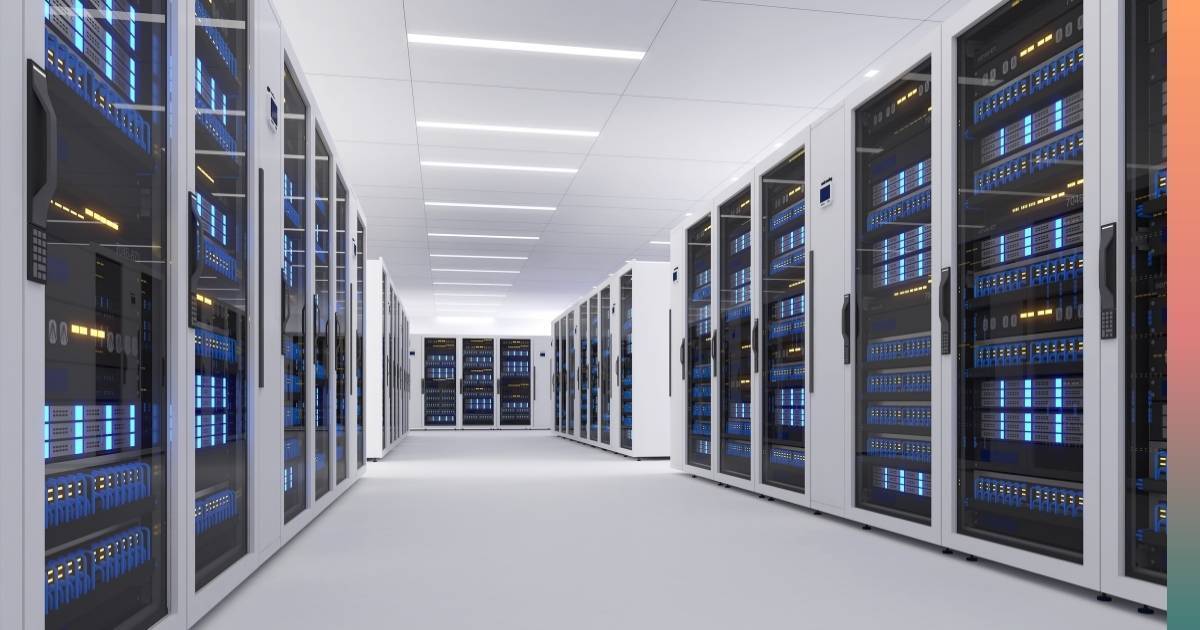





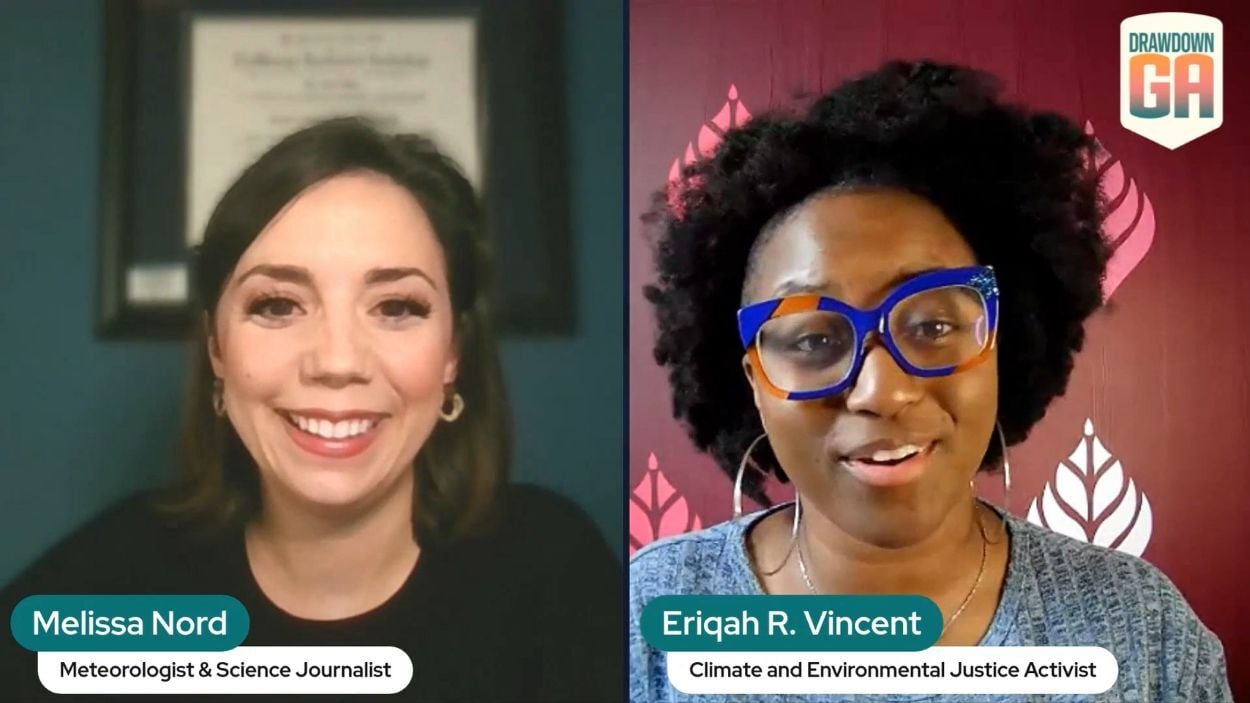
What is actually inside a data center, and what impacts can be expected if one is proposed in your community? For meteorologist and science journalist Melissa Nord, questions like these are just the tip of the iceberg when it comes to understanding the impacts data centers can have in our state.
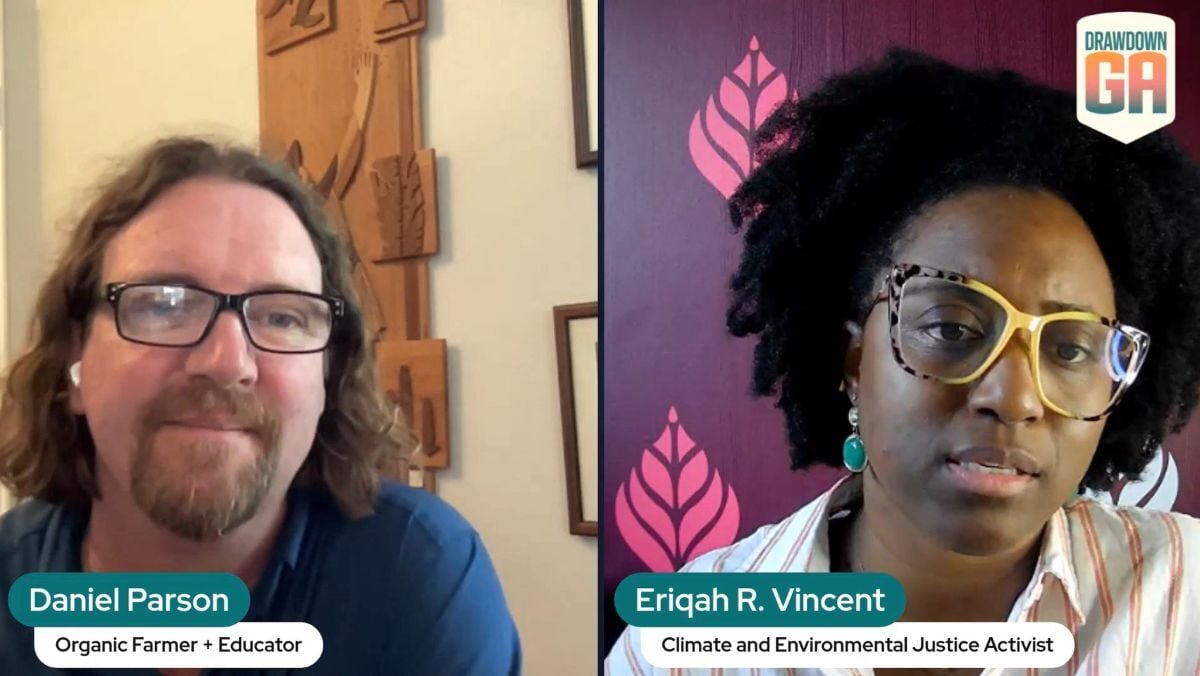
In our latest Georgia Climate Digest video interview, host Eriqah Vincent talks with Melissa Nord, a meteorologist and science journalist who has spent more than a dozen years in local and national weather, about her experience producing Drawdown Georgia's newest video series. The six-part series is a companion piece to the Data Centers Toolkit, built to help everyday Georgians understand what data centers are, how they use energy and water, and what it means for a community when one is proposed nearby.
Chapters
00:00 Welcome and Meet Melissa Nord
00:36 What Inspired Melissa's Career in Weather and Climate?
04:07 What's the Key to Communicating About Climate?
06:29 What Is the Data Centers Toolkit and Who Is It For?
10:53 How Is DeKalb County Responding to Data Center Proposals?
14:32 What Surprised Melissa Most About Data Centers?
22:29 What's the Most Important Takeaway From the Toolkit?
25:21 How Does AI Fit Into the Data Center Conversation?
26:11 What's Giving Melissa Nord Hope?
Watch the video above to hear the full conversation, or keep reading for highlights from their conversation about the issues Georgia communities need to understand about data centers and how to get involved.
What Inspired Melissa's Career in Weather and Climate?
Melissa traces her path back to being scared of storms as a kid. "My fear really grew into fascination," she said, pointing to the summer of 1998, when she watched meteorologists reporting live from tropical storms Bonnie and Charley on The Weather Channel. That fascination with the science behind the weather, not just the wind but storm surge, rainfall, and inland flooding, set her on a path toward meteorology and, eventually, climate journalism.
What's the Key to Communicating About Climate?
For Melissa, effective climate communication comes down to clarity and making big-picture research tangible. "Trying to break it down to something tangible" and connecting it to daily life, she said, like what it means for the food people eat or the economy in their community, helps cut through topics that might otherwise feel abstract or political.
What Is the Data Centers Toolkit and Who Is It For?
Melissa's video series complements Drawdown Georgia's Data Centers Toolkit, a resource built for community organizations, local lawmakers, and residents who want to understand data centers in depth. The videos take a different angle: they're made for the everyday Georgian who hears about data centers in the news or in conversations with their neighbors, but hasn't had a clear explanation of what's actually happening inside one.
The series covers multiple angles: what a data center is and how it uses energy and water, how data centers could become more efficient over time, and what it actually means for a community when one is proposed nearby. Melissa also speaks with community advocates who have already been through a data center proposal in their area to help other Georgians understand what questions to ask and what options they may have.
How Is DeKalb County Responding to Data Center Proposals?
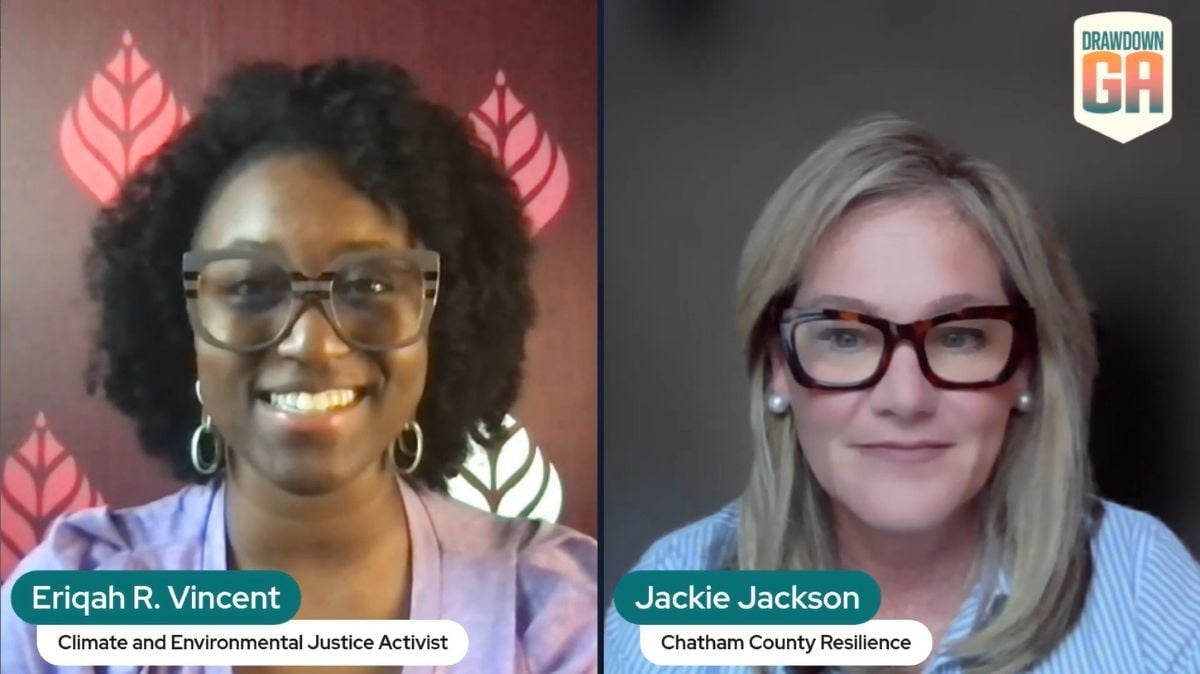
One of those advocates was Gina Mangham of Renew DeKalb, who has attended nearly every DeKalb County commissioners meeting to push for a zoning text amendment. The issue: Residents discovered that DeKalb County's zoning allowed data centers to be sited far too close to residential neighborhoods, with no real buffer zone required.
Mangham's organization pointed to a U.S. Department of Energy report on the water use, energy use, and heat that data centers generate, along with the pollution risk from diesel backup generators, to argue for a larger buffer between data centers and homes. Most of the data centers proposed in DeKalb County have been concentrated in the eastern and southern parts of the county, which Eriqah noted is also home to one of the state’s largest Black populations, adding an equity dimension to where these facilities are being sited.
What Surprised Melissa Most About Data Centers?
Melissa didn't fully grasp how much water and energy data centers use before researching the series. Data centers need to sit near fiber infrastructure and require constant cooling, which generally happens one of two ways: open-loop cooling, which uses water only once before it evaporates, or closed-loop cooling, which recycles water but draws more electricity.
The scale surprised her most. She learned that Project Camellia in Effingham County, the largest data center proposed in Georgia so far, would use as much energy annually as 2.4 million homes if running at full capacity. Georgia has become an attractive location for this kind of development partly because the state currently runs a power surplus of about 30%, compared to a typical 15% surplus in most states.
Melissa also pointed out a gap in oversight: Georgia has no state law requiring data center owners to publicly disclose their actual energy or water use, so what's known publicly is often limited to what's proposed, not what's actually consumed.
What's the Most Important Takeaway About Data Centers for Georgia Communities?
Melissa's advice is simple: start researching now, whether or not a data center has been proposed near you yet. "We have more and more demand for data centers because AI uses a lot more," she said, and that demand isn't likely to shrink.
The toolkit is built to meet people wherever they're starting from. The full toolkit online covers the detailed resources and technical nuts and bolts, while the video series works as an entry point for residents who want the basics explained before digging deeper into what's happening in their own community.
How Does AI Fit Into the Data Center Conversation?
Eriqah and Melissa also touched on how much AI and data center usage already runs quietly in the background of everyday life. Mapping apps, streaming services, and even predictive text on a phone all rely on data centers and, increasingly, AI. That everyday, often invisible demand is part of what's driving the need for more data center capacity in Georgia.
What's Giving Melissa Nord Hope on Climate?
Melissa finds hope in a thread that runs through all of her reporting: wherever people live in Georgia, they want their community to thrive. "Everybody wants the same thing at the end of the day, and that is to live in a great place," she said. When conversations stay focused on solutions and science rather than politics, she's found that people on different sides of an issue can still have a productive, back-and-forth conversation.
How Can I Take Action on Data Centers?
Explore the full Data Centers Toolkit from Drawdown Georgia to find plain-language answers on energy and water use, an interactive map of proposed and existing data centers across the state, a list of questions to bring to developers and local officials, and a directory of Georgia organizations that can help your community get informed and engaged.