





Georgia is in the middle of one of the biggest infrastructure booms in its history, and most communities are learning about it one proposal at a time. Drawdown Georgia built a free toolkit to help ensure that communities have a seat at the table when decisions are being made. Here's what's inside, and why this moment is so important.
Why Are Data Centers a Hot Topic in Georgia?
The unprecedented growth in data centers in our state is hard to ignore. In September 2026, real estate firm CBRE reported that the Atlanta metro area has overtaken Northern Virginia, long considered the data center capital of the country, as the nation's top market for data centers currently under construction. In a May 2026 filing, Georgia Power disclosed commitments from 31 large-load customers totaling 12,400 megawatts of demand through the mid-2030s. According to an analysis by Science for Georgia, that's enough electricity to power every home in the state, with enough left over for a million more homes elsewhere.

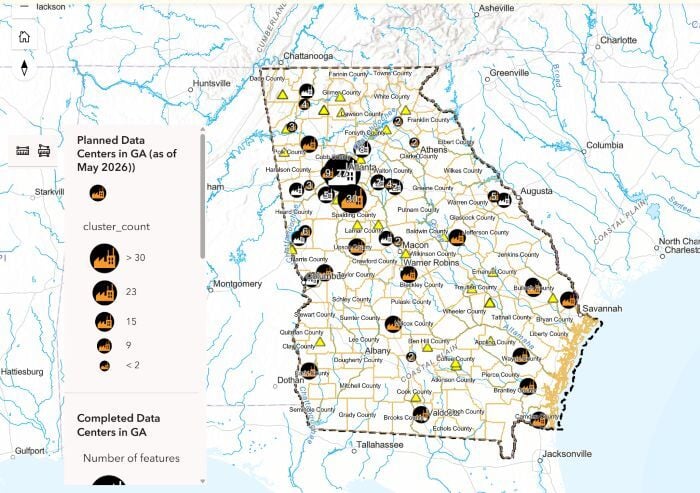
This isn't an abstract, statewide trend. Data centers are now operating, under construction, or proposed in nearly one third of Georgia's 159 counties, according to Chattahoochee Riverkeeper. Local governments have already taken notice: more than 80 Georgia cities and counties have passed moratoriums or adopted new ordinances to address data center construction and operation. That's a lot of communities making high-stakes decisions, often with limited time and limited information.
How Can I Get Engaged on Data Centers in my Community?
Data Centers in Georgia: What Should Communities Know and Ask? is a free, web-based toolkit built for exactly this moment. It doesn't take a position for or against any specific data center project. Instead, it's built to help any Georgian, whether you're a resident hearing about a proposal for the first time or a local official trying to prepare, understand what's actually happening and ask the important questions before decisions get made.
The toolkit includes a six-part video series, an interactive statewide map of data centers in Georgia, a full web guide organized by topic, and a library of downloadable resources designed to be printed and carried into a public meeting.
What Can I Learn About Data Centers from the Video Series?
The toolkit opens with a video series produced by Melissa Nord, an Emmy-winning meteorologist and Georgia climate educator. Each episode tackles one piece of the picture: what a data center actually is, how much energy and water it uses, how it could support clean energy investment in Georgia, and how communities can have a real voice in the process. They're built to be watched in a few minutes each, no technical background required.
How Can I See Where Data Centers Are Being Proposed or Built in Georgia?
The toolkit includes an embedded, regularly updated map developed by Science for Georgia that shows where data centers are operating, under construction, or proposed across the state. If you've heard a rumor about a project near you but don't know its actual status, whether it's just been announced, is filed with the county, or has already been approved, the map is the fastest way to find out.
What Does the Toolkit Actually Explain?
The full web guide--also available as a downloadable PDF--walks through the questions Georgians are already asking, in plain language:
-
What does a data center do?
-
How much water and electricity does it use, and can the local grid handle it?
-
Could it affect drinking water or private wells during a drought?
-
Could it bring more solar power and battery storage to the area?
-
What happens to nearby property values and noise levels?
-
Do data centers actually create jobs, and who pays for the roads and infrastructure to support them?
-
How does a project get approved in Georgia, and when can the public weigh in?
Each section also names real, honest tradeoffs rather than only reassurance, since burying legitimate concerns in caveats is exactly what erodes a community's trust.
What Questions Should I Ask About a Proposed Data Center?
A data center proposal usually arrives in pieces: a rezoning application here, a utility filing there, a company's own promotional materials somewhere else. That’s why it can be so difficult to correctly judge the impact of a project in either direction, too alarming or too reassuring, depending on which piece a resident happens to see first.
This toolkit helps you identify the questions that can help communities close these gaps. The goal is not to predetermine the answer, but to ensure that decision-makers and residents are evaluating the same complete project.
It’s important to understand the difference between the first phase and the full buildout, who holds the financial risks, and which commitments are enforceable rather than vague promises. These are the details that turn a general sense of worry or reassurance into something specific and checkable. Asking generalized questions about noise, generator, or water use won’t tell a community how large that impact will actually be. Getting quantifiable details about plans, permits, and ongoing monitoring data will.
What Resources Can Prepare Me to Attend a Public Meeting?
Beyond the web guide, the toolkit offers a complete set of printable resources for community engagement: a one-page quick brief for a fast overview, a community checklist you can bring to a meeting, a directory of Georgia organizations and state agencies that can help with legal, water, and economic questions, and a two-page overview of Community Benefits Agreements developed with Georgia WAND.
Who Contributed to This Toolkit, and What Is the Goal?
Drawdown Georgia built this toolkit with content and data support from the Southern Environmental Law Center, Science for Georgia, and Sustainable Newton, guided by one goal above all: to educate and empower Georgians. Most existing resources on this topic don't work that way. Some are built for organizing opposition. Others are built to help data centers move forward smoothly. Few are built simply to inform a resident who hasn't made up their mind yet, or who just wants accurate information before they do. This toolkit aims to fill that gap, serving as a resource any Georgian can trust regardless of where they land on a specific project.
Get the Free Data Centers Toolkit and Get Engaged in Your Community
Whether a data center has already been proposed in your county or you just want to better understand the issue before it reaches your community, the toolkit is built to meet you where you are. Watch the videos, check the map, read the guide, and download the resources you need.
Explore the full toolkit at DrawdownGA.org/data-centers.