




For many Georgia businesses, sustainability starts inside their own operations. But as more companies dig into their data, a clear pattern is emerging: the majority of emissions often sit outside their direct control, embedded in supply chains, materials, and partners.
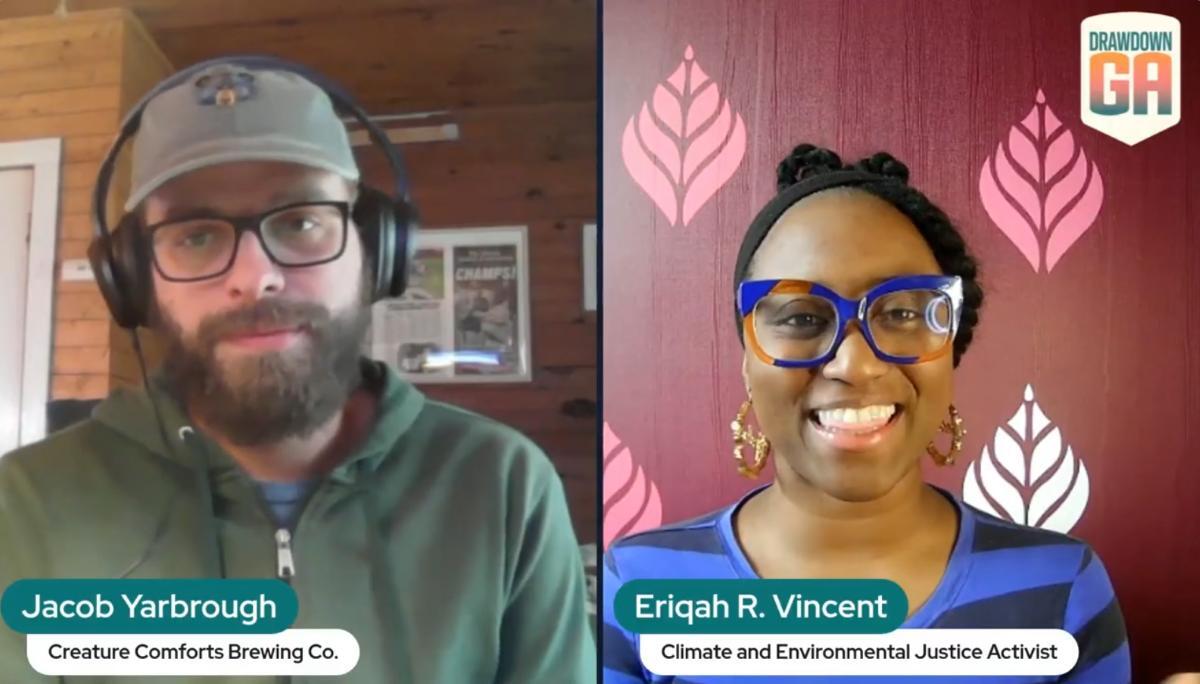
That is exactly what Jacob Yarbrough, senior sustainability manager at Creature Comforts Brewing Co., is working to address.
In our latest Georgia Climate Digest video interview, host Eriqah Vincent sits down with Jacob to explore how one of Georgia’s leading craft breweries is taking a practical, business-minded approach to reducing emissions, with a growing focus on Scope 3.
Chapters:
1:22 - Overview of sustainability efforts at Creature Comforts Brewing Co.
2:31 - The business case for sustainability at Creature Comforts
5:37 - Jacob shares the benefits of Drawdown Georgia Business Compact membership
9:07 - Defining Scope 1, 2, and 3 Emissions for Georgia Businesses
12:38 - How Creature Comforts developed a plan for reducing Scope 3 Emissions
23:05 - Jacob’s advice for Georgia businesses seeking to reduce Scope 3 Emissions
28:02 - The low price of renewable energy + other ideas that are giving Jacob hope on climate
Watch the video above to hear their full conversation, or keep reading to learn how Creature Comforts is digging deep into their business to help bring climate solutions home.
Why Sustainability Is a Smart Business Strategy, Not Just a Value Statement
At Creature Comforts, sustainability is not treated as a separate initiative. It is integrated into how the business operates and grows.
“As a brewer, I depend on crops,” Jacob explained. “I depend on barley grain, I depend on wheat. I depend on hops in order to make beer and make my own living. And so taking care of sustainability is a business interest for us.”
That connection between climate conditions and supply reliability is increasingly relevant for Georgia businesses, especially those tied to agriculture, manufacturing, or global supply chains. But the business case does not stop there.
Jacob also emphasized operational efficiency as a major driver. “Something that I really focus on is eliminating waste… my work tends to pay for itself and then some in terms of revenue saved for the company.”
For business leaders balancing cost pressures, competitiveness, and long-term planning, this dual benefit is key. Sustainability can reduce risk and uncover savings at the same time.
This course can help business leaders gain the tools, data insights, and strategies to turn energy data into action. Learn more about the Energy Management and Reporting course and sign up to be notified when registration for the next session begins.
What Are Scope 1, 2, and 3 Emissions, and Why Do They Matter?
To understand where the biggest opportunities lie, it helps to break emissions into three categories.
Jacob offered a clear, practical explanation:
-
Scope 1 emissions are direct emissions from operations you control, like fuel burned on-site or in company vehicles.
-
Scope 2 emissions come from purchased energy, typically electricity generated elsewhere.
-
Scope 3 emissions include everything else across your value chain, from suppliers to product use.
“For example, when we’re going to brew a beer… the emissions that are associated with a farmer farming that grain. It’s a Scope 1 emission for the farmer, but it’s a Scope 3 emission for me.”
This framework helps businesses avoid double-counting and understand where emissions originate. But it also reveals something important.
At Creature Comforts, only about 30 percent of emissions fall under Scope 1 and 2. The remaining 70 percent are Scope 3.
That breakdown is common across many industries, especially those with complex supply chains. It means that even the most efficient internal operations will only address part of the opportunity.
Why Scope 3 is the Biggest Challenge and the Biggest Opportunity
Scope 3 emissions are difficult because they are not fully within a company’s control. They involve suppliers, vendors, logistics partners, and even customer behavior.
“Focusing on Scope 3 is really hard,” Jacob said. “It’s hard enough to understand your Scope 1 and Scope 2 - those are the ones you have direct control over.”
But they are also where the largest impact can happen.
“The most impactful thing is to work with suppliers who share your values and are trying to improve their own emission chains.” For Georgia business leaders, this insight is critical. Supply chain decisions are not just operational or financial. They are a major lever for emissions reduction.
How Creature Comforts Approached Scope 3 Emissions in Practice
Rather than waiting for perfect data, Creature Comforts started with what was available and built from there. They followed the Greenhouse Gas Protocol and began with a spend-based analysis, estimating emissions based on how much they spent with different suppliers and industries.
“We were able to get all of our suppliers in a file together… whether they were a grain farmer or a cardboard manufacturer or an aluminum can manufacturer.” From there, they paired spending data with emissions factors from federal datasets, adjusted for inflation, and created a first draft of their Scope 3 footprint.
Importantly, Jacob did not treat that first pass as final. “That was a really good beginning place. It’s not a final version.” The next step was direct engagement.
“I took the emissions values that we had estimated and went directly to my primary suppliers and said, ‘Hey, this is something that we’re working on. This is something that we care about.’”
That conversation shifted the dynamic. Instead of asking suppliers to start from scratch, he brought a starting point and invited collaboration. “All of a sudden, I’m not asking them to solve all of my problems. I’m saying, here’s something I’ve got already.”
This approach led to more accurate data, stronger relationships, and ultimately, business decisions. “We have made a couple of supplier changes that were influenced by this process… a more sustainable supplier actually won our business.”
How Can Georgia Business Leaders Reduce Scope 3 Emissions?
Many business leaders are navigating similar challenges, including limited data, resource constraints, and the complexity of supply chains. The experience at Creature Comforts offers a practical roadmap:
Start with what you can control
Before diving into Scope 3, build momentum internally. “I have the most influence over what I am doing,” Jacob said. “And so that deserves the most focus right now.”
Energy efficiency, waste reduction, and process improvements often deliver quick wins and cost savings.
Use imperfect data to get started
Waiting for perfect information can delay progress. Creature Comforts used older datasets and estimates as a starting point, then refined them over time.
“We’re all working with the information that we have and doing the best we can,” Eriqah noted.
Engage your suppliers as partners
Scope 3 work is as much about relationships as it is about data.
“The relationship that I want to have with suppliers goes beyond just transactions,” Jacob said. “We need to be aligned in our values.” That alignment can lead to better data, shared innovation, and stronger long-term partnerships.
Let business value guide decisions
Sustainability initiatives are more likely to stick when they align with cost, quality, or risk management.
“The business case needed to be there as well,” Jacob said of supplier changes.
Build community and collaborate
No company has to solve this alone. As a member of the Drawdown Georgia Business Compact, Creature Comforts has benefited from connections with other companies around research, tools, and peers working toward similar goals.
“You are not… responsible for developing and implementing every solution on your own,” Jacob said. “You get to join a group of people… who have thought a lot about these issues.”
A Shifting Landscape Is Creating New Opportunities
Beyond individual companies, broader trends are making climate solutions more practical.
Jacob pointed to one example: the declining cost of renewable energy. “The levelized cost of electricity for solar plus storage is the lowest of all forms of electricity now… the greenest option is the most prudent one to invest in.”
For business leaders, this signals a shift. Sustainability is increasingly aligned with economic efficiency and long-term resilience.
At the same time, more people are experiencing the real-world impacts of changing conditions. “Reality has a way of asserting itself,” Jacob said. “As more people experience more direct impacts… more people want to get on board with doing something about this problem.”
What Advice Does Jacob Have for Businesses Getting Started?
His guidance is straightforward and actionable: “Don’t be afraid to try. Oftentimes, caution can prevent people from even attempting something.”
He also encouraged leaders to take a closer look at their operations. “Really get into the nitty gritty… you might be surprised where you can find opportunities.”
And importantly, focus your efforts. “You don’t need to fix the world yourself. You can find an area that you care about and make a difference.”
That mindset has already led to measurable results at Creature Comforts, including significant reductions in water use and ongoing improvements across their operations.
The Bottom Line for Georgia Businesses
Scope 3 emissions may be complex, but they are also where meaningful progress can happen. By starting with available data, engaging suppliers, and aligning sustainability with business value, companies can uncover new opportunities to reduce emissions and strengthen their operations.
As this conversation shows, Georgia businesses are already leading the way, building supply chains that are more resilient, efficient, and aligned with the future.
Stay Connected to Conversations Like This One
Subscribe to the Georgia Climate Digest to receive the latest good news on climate in Georgia and to hear directly from business leaders, researchers, and community voices advancing climate solutions that work best in our state, all sent right to your inbox twice a month.