




Composting transforms organic waste into nutrient-rich soil while reducing greenhouse gas emissions, yet most Georgia households aren't taking advantage of this climate solution. Research from Georgia Tech shows that only 17% of Georgia households compost at home, and just 5% use collection sites, leaving significant room for growth in one of Drawdown Georgia's 20 climate solutions.
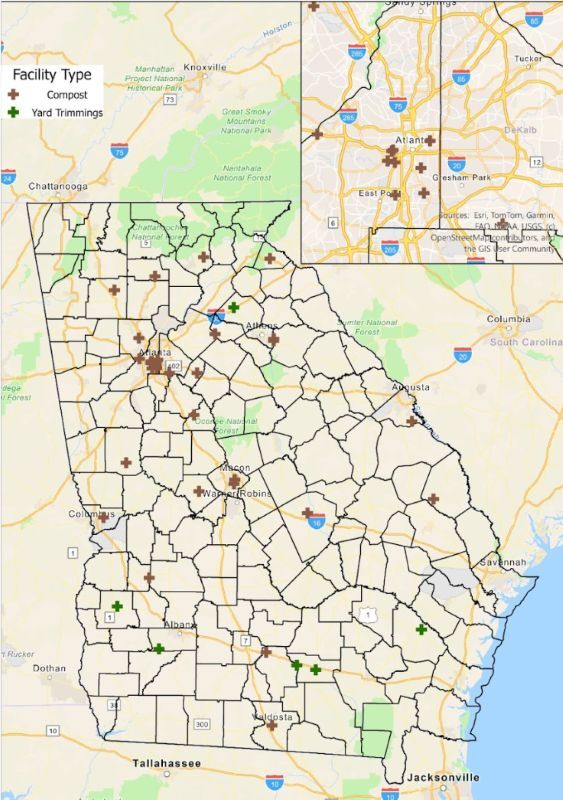
To help Georgians find composting resources near them, researchers at Georgia Tech have developed an interactive map of composting facilities throughout the state, which shows collection sites, drop-off locations, and active composting operations across Georgia.
This research also reveals compelling insights about food waste and composting in Georgia, highlighting the substantial opportunity to divert organic materials from landfills and reduce the state's carbon footprint.
What is composting?
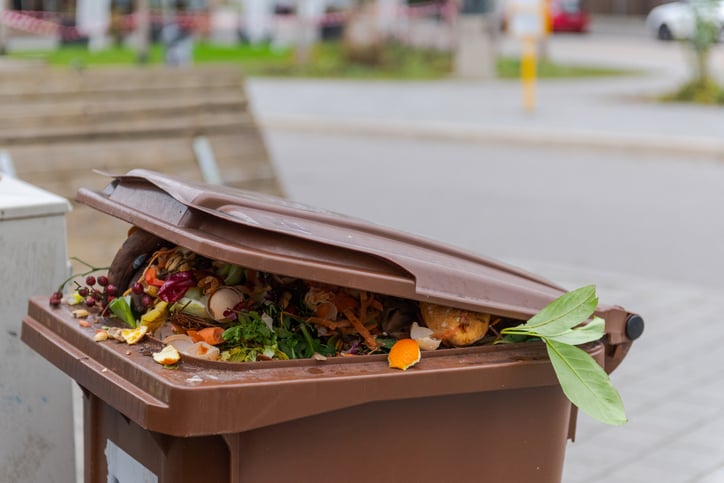
Composting is a natural process that transforms organic waste materials into a rich, nutrient-dense soil amendment known as compost. This process is a critical component of sustainable waste management and soil health enhancement. When organic materials decompose through composting rather than in landfills, they break down aerobically, avoiding the production of methane, a greenhouse gas many times more potent than carbon dioxide.
Where can I find composting facilities in Georgia?
Georgia has composting facilities distributed throughout the state, with varying scales and capabilities. The new interactive map shows the locations of permitted composting operations, collection sites, and drop-off locations.
The facilities listed in the map were identified through Georgia Environmental Protection Division permitting records and conversations with the Georgia Composting Council. Some facilities serve as collection or drop-off sites, while others are locations where active composting occurs. The facilities vary in scale and in the types of materials they accept.
In addition to mapped composting locations, households and businesses actively compost on their own property, drop off compostable materials at collection sites, or use organizations like CompostNow that collect food waste from homes and businesses.
>>Explore the interactive map now.
How many Georgia households currently compost?
Drawdown Georgia researchers conducted a survey of Georgia residents to understand current composting practices. The survey results estimate that around 17% of households do backyard composting, with another 5% dropping their compostable materials at a collection site.
These numbers reveal substantial opportunity for expansion. With approximately 78% of Georgia households not currently composting, there is significant potential to divert organic materials from landfills and reduce greenhouse gas emissions across the state.
How much food waste do Georgia households generate?
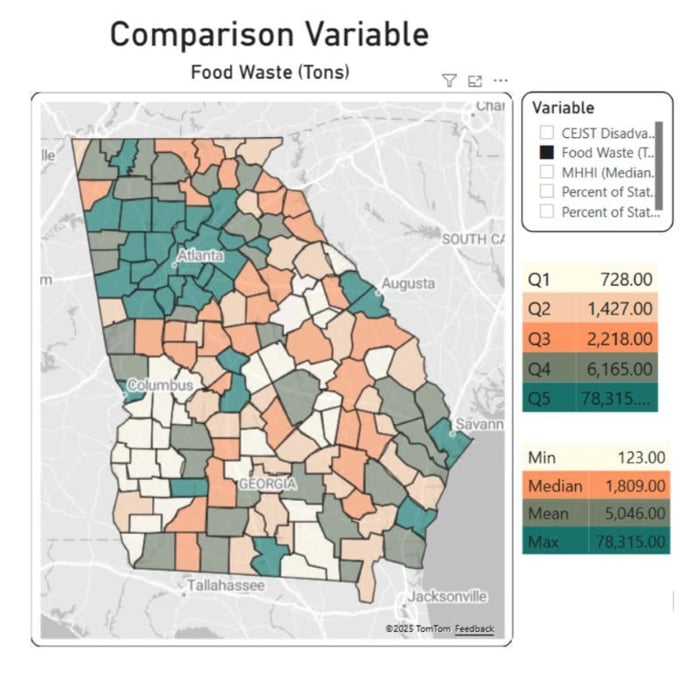
The Drawdown Georgia household survey also asked respondents about their food waste, including the value of food thrown away in a typical week. On average, Georgia households reported discarding approximately $30 worth of food per week.
Estimates by rural households were slightly lower than $30 per week, while urban and suburban households reported slightly higher amounts. Food prices vary across the state, as does the type of food people eat, but the value of food thrown away per household multiplied by the number of households in a county serves as a useful proxy for the relative size of the potential food waste stream.
County-level analysis shows the value of annual household food waste varies significantly across Georgia, with the highest concentrations in metropolitan areas. Researchers used the percentage deviation from the average food waste cost for urban, suburban, and rural households reported in the survey to characterize each county's food waste more precisely.
What happens to biosolids from wastewater treatment in Georgia?
Biosolids—the semi-solid, nutrient-rich product that is left when liquids are separated from domestic sewage in wastewater treatment facilities—represent another major source of organic matter in Georgia landfills. Drawdown Georgia researchers are building a database of Disposal Records from wastewater treatment facilities to identify how and where biosolids are being disposed.
Records for the years 2019-2021 indicate that between 30% and 55% of biosolids were disposed of in landfills during that period, while only 5% to 8% were composted. Biosolids represent one of the few large sources of compostable material that can be tracked over time through government records.
This data reveals another significant opportunity to divert organic materials from landfills. Increasing the percentage of biosolids that are composted rather than landfilled could substantially reduce organic waste and associated greenhouse gas emissions.
Why does composting matter for Georgia's climate goals?
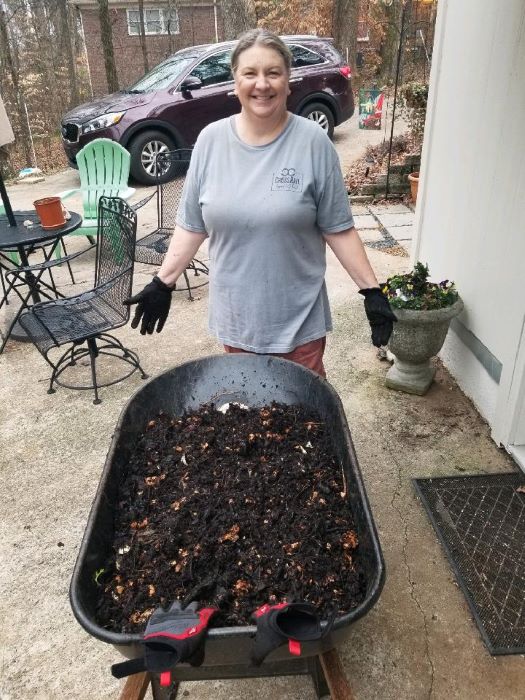
Composting is one of Drawdown Georgia's 20 climate solutions, market-ready, cost-competitive strategies with strong track records for reducing greenhouse gas emissions. When organic materials decompose in landfills without oxygen, they produce methane, a greenhouse gas many times more potent than carbon dioxide. Composting these materials instead allows them to break down aerobically, avoiding methane emissions while creating valuable soil amendment.
From biosolids to household food scraps, there are numerous opportunities to divert organic materials out of Georgia landfills. Acting on those opportunities would significantly reduce Georgia's carbon footprint while creating nutrient-rich compost that improves soil health and supports sustainable agriculture.
How can I start composting in Georgia?
Getting started with composting is easier than many Georgians realize. Whether you want to compost in your backyard, find a nearby drop-off location, or arrange for pickup service, resources are available to help.
Drawdown Georgia’s free How to Compost at Home in Georgia toolkit provides comprehensive guidance for Georgia residents interested in reducing food waste and starting a composting practice. The toolkit answers common questions about composting methods, what materials can be composted, and how to maintain a successful composting system.
Do I need a permit to compost at home in Georgia?
No permit is required for backyard composting in Georgia. Backyard composting and operations that use only yard trimmings, land-clearing debris, or agricultural residuals generated and processed on site do not need a permit from the Georgia Environmental Protection Division to operate.
This regulatory approach makes it easy for Georgia residents to start composting without bureaucratic obstacles. However, it also makes tracking the total amount of composting activity in Georgia more challenging, since unpermitted backyard operations are not required to report their activities.