Why does one room in your house always run hot in the summer? Why do you feel a draft by the window even when it's shut tight? For Nicole Lee, questions like these start every home energy audit, and the answers often point to simpler, cheaper fixes than homeowners expect.
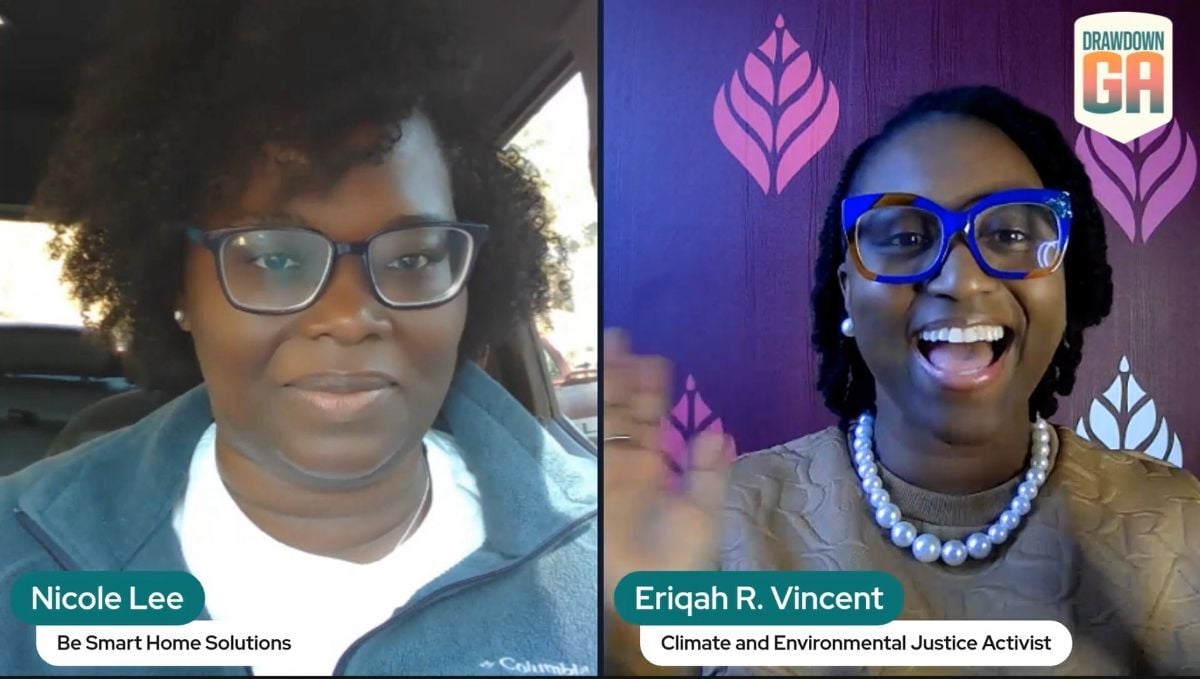
In our latest Georgia Climate Digest video interview, host Eriqah Vincent talks with Nicole Lee, founder and CEO of Be Smart Home Solutions. Based in Savannah, Be Smart Home Solutions is an energy consulting firm that performs home energy audits, weatherization upgrades like insulation, air sealing, and duct sealing, and solar installations. Nicole joined the conversation from a job site, which felt fitting.
Since founding the company in 2022, Nicole has helped families connect with utility and nonprofit programs that cover some or all of the cost of retrofitting their homes. Her team has also installed rooftop solar for lower-income homeowners through the Georgia BRIGHT program.
Chapters
00:00 Welcome and Meet Nicole Lee
01:51 From Marketing Degree to Building Science
03:12 Building a Legacy and Educating Clients
04:40 What Happens During a Home Energy Audit
07:25 Older Homes vs. Newer Homes
09:45 Georgia Heat, Humidity, and Thermostat Habits
12:16 Why You Feel Cold by the Window
14:59 Where to Start With Upgrades on a Budget
16:03 Building Trust Around Solar
18:23 Roofs, Upfront Costs, and Solar Equity
21:27 Advice for Young People Considering the Field
23:54 What's Giving Nicole Hope
Watch the video above to hear their full conversation, or keep reading for highlights on what an energy audit can tell you, where to start with upgrades, and how to know whether solar makes sense for your home.
Why Building Science as a Career Path?
Nicole's degree is in marketing and accounting, a long way from building science. Her path into the field began with a senior-year internship, where she learned the work from the ground up and later partnered with utilities on their energy-efficiency programs. Back then, she said, many utilities either didn't offer those programs or didn't do much to tell customers about them. She has watched weatherization and efficiency work grow across Georgia since.
The internship also showed her what she loved about the job. "I actually enjoy traveling, meeting a variety of people, and learning that not every home is the same," she said.
Today, her vision for Be Smart Home Solutions has two parts. The first is personal: she wants to build something lasting for her daughter, who has been riding along to job sites since she was seven, knows how to do the work herself, and is graduating this year with plans to become an environmental engineer. The second is education. "I want my clients to have all of the information that they need," Nicole said, "so that they can make confident decisions when it comes to their homes and not feel overwhelmed."
What Happens During a Home Energy Audit?
Nicole compares an energy audit to an annual physical, with your home as the patient.
The intake. Before any testing, her team sits down with the homeowner and asks about symptoms. Are some rooms extra cold? Which rooms get hottest in the summer? Are there months when the bill is unexpectedly high?
The checkup. Next, the team runs diagnostic tests:
-
A blower door test to measure how much air leaks in and out of the house
-
A duct test to see how well the ductwork is performing
-
A look at the HVAC system, which Nicole calls the home's respiratory system
-
A check of insulation levels
-
Thermal imaging to find where air is leaking into the home
The prescription. "Just like a doctor wouldn't give you medicine without testing everything, we want to be able to give you a clear and prioritized blueprint of the things that your home needs," Nicole said. For example, if a home has little or no insulation, that becomes step one, since insulation can make a huge difference in comfort.
Her recommendations also include tasks homeowners can handle themselves. Air sealing is "like a weekend warrior job," she said: grab a caulk gun and work your way around windows and under sinks. And if you don't have a digital thermostat, she'll point you to good options and any rebates available. With a digital thermostat, you can track how often your system runs and for how long, so you know exactly where your money is going.
Do Older Homes Need More Energy Upgrades Than Newer Ones?
Generally, yes. Older homes tend to have less insulation and more air leaks, Nicole said, because they were built under older building codes, or no codes at all. Newer homes built to current codes usually need less work. Sometimes switching to a digital thermostat is all it takes.
But a newer home doesn't guarantee a low bill. When owners of newer homes tell Nicole their bills are high, one of her first questions is where they keep the thermostat. One client told her she kept her house at 68 degrees all summer. "When you're looking at keeping your thermostat at 68," Nicole said, "then you have to look at a utility bill that will reflect that 68."
What Are the Most Common Ways Energy Is Wasted in Georgia Homes?
Nicole's answer was quick: thermostats. More specifically, how people use them.
Georgia's heat and humidity play a big part. The state has several climate zones, and a humid day in Savannah, where Nicole is based, is a different animal from a humid day in Atlanta. During the hottest stretches of summer, she often sees clients crank the thermostat down to a very low temperature when they get home, hoping to cool the house faster. It doesn't work that way. A house that has been heating up all day won't reach 70 as quickly as you'd like, no matter how low you set it. A digital thermostat that holds a steady temperature keeps your system from playing catch-up.
Ceiling fans are another common misunderstanding. Many people think a fan cools the house by moving air around. It doesn't. "The ceiling fan or a fan is there to cool you," Nicole said. "But as soon as you leave, the ceiling fan has no use. It's just running to run." In other words, turn it off when you leave the room.
Why Do You Feel a Draft by Your Windows in the Winter?
Insulation works in both directions, Nicole explained. In the summer it helps keep cool air in, and in the winter it helps keep warm air in.
One of the most common winter complaints she hears is feeling cold air coming through the windows. Often, that isn't air at all. It's heat transfer: warmth from your body moving toward the cold surface of the glass. "Even if you have the newest windows, you're still gonna feel that," she tells clients.
That matters because new windows are at the top of many Georgia homeowners' wish lists, and they're a huge investment with no programs to help pay for them. To show clients what's really happening, Nicole has them sit by the window while the blower door test runs. Once they see that no air is coming through, it clicks.
The practical takeaway is about where you sit and sleep. A bed placed right next to a window will feel cold all winter, and that same spot will feel warm in the summer when the sun comes through the glass.
Which Energy Upgrades Should You Make First on a Tight Budget?
If you can only afford one or two upgrades this year, Nicole recommends starting with the inexpensive ones:
-
Switch to a digital thermostat.
-
Swap out old light bulbs for LEDs.
Older bulbs give off a lot of heat. That's not so bad in the winter, but in the summer, the lamp next to your chair is adding heat your air conditioner has to fight.
As Eriqah pointed out, many of these recommendations are changes renters can also make to save money on their energy bills.
>> Get more tips for improving the energy efficiency of your home for renters.
How Can Homeowners Tell Whether to Trust a Solar Pitch?
Plenty of Georgians are wary of solar sales pitches, and Nicole understands why. Her approach comes down to "being relatable and strictly honest."
"If I wouldn't do it in my own home, I wouldn't recommend it to you," she said. When she doesn't know an answer, she says so and offers to find out together with the homeowner. That kind of transparency, she believes, builds far more trust than an aggressive sales pitch.
Honesty sometimes means telling people solar isn't right for them. If a home is heavily shaded by trees, she'll say so, even if another salesperson promised otherwise. And she won't push cutting down trees unless it's truly necessary.
When solar isn't the right fit, Nicole's team looks for weatherization programs the home qualifies for instead. Many utilities offer free or discounted efficiency upgrades, and her team helps homeowners sign up.
>> Check out our free Rooftop Solar Toolkit to learn more.
Why Do Roofs Keep So Many Lower-Income Families From Going Solar?
Be Smart Home Solutions has installed rooftop solar for lower-income homeowners through Georgia BRIGHT, a program led by the nonprofit Capital Good Fund. Eriqah noted that about half of the program's early applicants couldn't qualify because of the condition of their roofs.
Nicole sees this all the time. A roof that's more than about 10 years old makes solar harder. Roofs typically last 15 to 20 years, so even a 15-year-old roof that has never leaked is nearing the end of its life. "The last thing we would wanna do is install solar and then next thing you know you have a roof leak," she said, because the panels would then have to come off before the roof could be replaced.
In low- and moderate-income communities, many homeowners have never replaced their roof since moving in, either because they don't know where to start or because they can't afford it. Upfront cost has long been the biggest barrier to solar for these families, but Nicole also points to other hurdles, such as necessary electrical upgrades or shade from trees.
What Advice Does Nicole Have for Young People Considering a Career in Energy Efficiency or Solar?
Nicole emphasized the value of learning both energy efficiency and solar. "They're two sides of the same coin," Nicole said. Understanding how a house holds heat and how air moves through it makes you better at designing the solar system on the roof.
She calls it an incredible career path, full of practical puzzles to solve in everyday homes. "Nothing beats the feeling of seeing a family's bill drop," she said.
Eriqah and Nicole also talked about the value of the skilled trades. Nicole's work depends on people who know plumbing, HVAC, electrical, and carpentry. "If you have those trades under your belt and you know how to do those jobs, you're a major component to my work," she said. The need is even greater in rural Georgia, where homeowners often struggle to find tradespeople who can come out quickly without charging extra for the drive.
What Is Giving Nicole Lee Hope About Climate in Georgia?
Nicole is encouraged by the shift toward a future where affordable energy and clean power are more accessible to everyone, not just a select few. As community programs expand, more people learn what's available, and new local workforce opportunities open up along the way.
"Just knowing that we're building a more resilient Georgia from the grassroots up gives me hope," she said.
Stay Connected to Conversations Like This One
Subscribe to the Georgia Climate Digest to receive the latest good news on climate in Georgia and to hear directly from business leaders, researchers, and community voices advancing climate solutions that work best in our state, all sent right to your inbox twice a month.